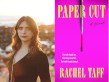
In The Evolution of Fire, the essayist explores how crises—from a house fire to the collapse of her marriage—can be agents of change.
What does fire represent to you?
I think fire is potential and possibility. I don’t mean potential just in the positive sense, but also in all of the dark and horrible ways things can go. I think about the potential for a human to be loving and generous and kind, and then also the potential for them to do evil and great harm to other people. Fire is that tipping point of becoming a consuming force or a force that creates home.
Was fire the jumping off point for this collection, or did it emerge as you were writing?
I enjoy essay collections that are a bit far-flung and hold different ideas together, but I also know that when a reader has a through line that they can hold on to, they’ll go anywhere. Because my house fire was such a life-changing moment, I kept returning to that. At the same time, I had become obsessed with the evolution of humans. When I read how one of the many things that helped us to evolve into the bodies we are now is most likely our use of fire, then I really started going off with it. I just got super excited about thinking about all the ways fire has affected both humanity, generally speaking, and then me personally.
How have moments of destruction led you to evolve?
I’m really nervous about doing a one-to-one direct correlation between pain and change. There are some things in my life that haven’t healed and will never heal, and you learn to live with and live around. I had such a moment in my life where all of these terrible things happened at once. It required a complete re-becoming, a remaking of myself. And so, again, I hesitate to frame it in a positive
way because it sure as hell did not feel positive as I was going through it. But looking back on it, I don’t know that I would have pursued writing the way I did. I don’t know that I would have shaped my life around art the way I did.
You write, “Once I dreamt of secrets as possibilities instead of pain.” Do you still view secrets as painful?
Secrets really terrify me, but maybe another version of secret is the unknown. Something can be unknown without being a secret, and the unknown is the most exciting possibility. I think of myself primarily as a lyric essayist. I am really dependent upon white space and not coming right out and stating things, and so in some ways I could see that as a reimagining of a secret, a way to allow people to participate in meaning-making without you telling them what they need to think. You invite them to think alongside you.