With Picador’s reprints of the now-classic Bolaño catalog in full swing, we asked former PW fiction reviews editor and novelist Gabe Habash (Stephen Florida) to pick his top five by the author. Since 2024, Picador has released Amulet, Antwerp, By Night in Chile (with a new introduction by Nicole Krauss), The Insufferable Gaucho, Monsieur Pain, and The Return. This month brings A Little Lumpen Novelita, Posthumous Stories (previously titled The Secret of Evil), and The Skating Rink. Those on the horizon for next April include two of Gabe's picks, Distant Star (with an intro by Ben Lerner) and Nazi Literature in the Americas, with more slated for fall 2026. It’s a remarkable body of work, to say the least, and we’re envious of those discovering it for the first time.
1. 2666
Some might warn against starting with it, but it was my first Bolaño, and it’s my favorite. I don’t have a favorite novel, but on certain days I think it’s my favorite novel. Besides, why work your way up to it? Where’s the fun in that? It should be scary to take the plunge. Why not have fun being scared and just dive headlong into the void? It's a mysterious book that never reveals all its secrets, which begin on the first page—as academic Jean-Claude Pelletier begins reading enigmatic German novelist Benno von Archimboldi for the first time—and remains enthralling for all 900 pages.
2. The Savage Detectives
Really, it’s splitting hairs between this and 2666, Bolaño’s two towering novels that can take over your life if you let them, and which complement each other despite being so different. I think you can tell a lot about a person by which one they prefer. As for me, Savage Detectives burrowed so far into my brain that I felt compelled to map out the entire (or at least as much as Google would let me) climactic road trip our group of poets undertake across the Sonoran Desert, searching for the reclusive Cesárea Tinajero, the mother of the Visceral Realism movement. I was—and still am—fascinated by the way their journey ascends to a spiritual level.
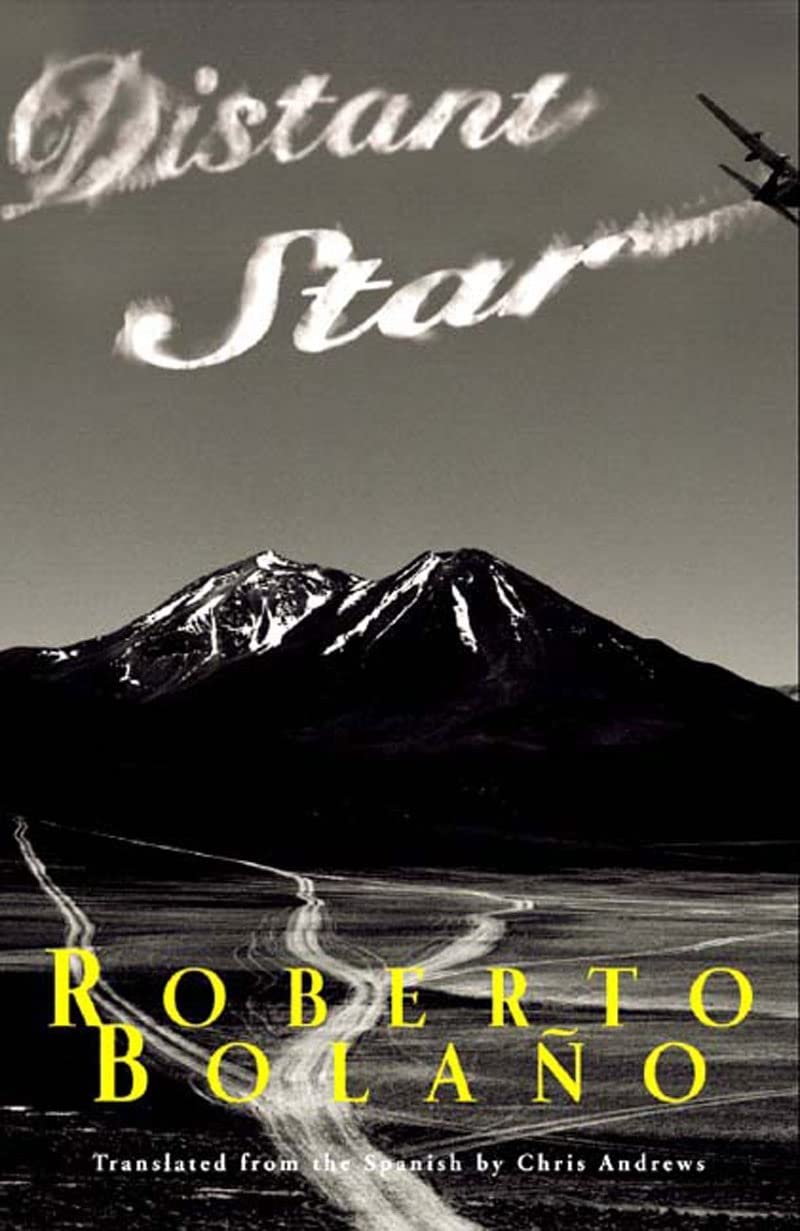
3. Distant Star
This short novel is the story of the disturbing and magnetic poet Carlos Weider, who, when he’s not skywriting poetry above Antarctica, is unsettling people because “there seemed to be another pair of eyes behind his eyes.” It’s so engrossing that the pages practically turn themselves, and its ending is among my favorites. But perhaps best of all is the 15-page chapter in which a party is thrown at an apartment where Weider presents an exhibition of his photographs. Weider wants to “surprise” the guests, and the photos are displayed in a restricted Bluebeardian room. The tension makes it nearly unbearable to sit through, by which I mean it’s a total joy to read.
But don’t take my word for it, translator Andrews himself says it’s the writer’s best book.
4. Last Evenings on Earth
This is one of my favorite short story collections ever, and there is one moment in the story “Enrique Martín” that encapsulates so much of what I love about Bolaño. The story is narrated by Arturo Belano, Bolaño’s alter ego, who is living on the edge of a village near Girona with five cats and a dog, “coming to accept the end” of his dreams. One night, a car pulls up outside, very late at night. It’s Enrique, another poet who has a tepid relationship with Belano. Enrique is vague and evasive and asks Belano to hold onto a package for him. But what makes the scene so memorable is the hovering pressure around the two: there’s a stone quarry nearby and “at least once a year, I had no idea why, they kept working till after midnight.” As Belano’s dog growls and Enrique refuses a drink, “a series of very loud noises, like explosions” come from the quarry. Though Belano attempts to reassure Enrique, “in fact it was the first time I had heard explosions at that time of night.” Belano never sees Enrique again, but is left with the mysterious package.
5. Nazi Literature in the Americas
Though not as invisibly immersive as the others on this list, it somehow feels just as total. It's a book that inspires me as a writer and makes me happy to be a reader, just to feel close to the heat of literature, something one might find in every single Bolaño book. The sheer volume of incidence in this book is something to behold; it's Bolaño run amok; his imagination gone haywire, frothing over and spreading, stuffing a whole cosmos of fictional right-wing writers into just over 200 pages. It approaches history (albeit mostly fictional) through its small, constituent parts. It’s reminiscent of Borges, sure, but I'm also reminded of Patrik Ouředník's Europeana, Judith Schalansky's Atlas of Remote Islands, and Édouard Levé’s Works, books you can pick up and read for five minutes just to get a jolt of dopamine. It's an explosion of Bolaño’s creativity and artistry, and, as one entry concludes: "The explosion was considerable."