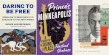
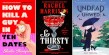
An abortion clinic worker develops supernatural abilities in the bestseller’s We Dance upon Demons.
Did your work as a civil rights lawyer impact the writing of this novel?
A lot of the discussions about abortion in the book—about rights, and how we can get back from this situation—are from my experience having these conversations in real life. I helped write a brief before the Supreme Court in Dobbs. I’ve worked with various reproductive rights organizations and also as a clinic volunteer. Being a civil rights lawyer in this landscape can be really demoralizing. I don’t want to say that the heroine Nisha’s entire emotional arc is my emotional arc, because that’s not true, but dealing with burnout and feeling like what she’s doing doesn’t matter, that was where I was at the beginning of 2023, when I first had the idea for this book. Writing was helpful for me to process that. In the law, you can’t yell back. If your opponent says something that you wholeheartedly disagree with, you write a brief about it. Writing this, and saying how I really feel—that was very cathartic.
How did you integrate demons into this real world struggle?
In many religions, demons represent something that’s bad about humanity, amplified. So I had the idea to use demons to represent all these negative attributes. But at the end of the day, as Nisha discovers, the real problem is humans. I think a lot of us have this desire to say, Oh, if we find this one fix, or get rid of this one person, or do this one thing, everything would be better—and I wish that were true every day. But it’s not. You could have a different Supreme Court and abortion would still be under attack. You could have a different president and there would still be a very difficult landscape for reproductive rights. Getting rid of the demons represents this idea of a quick fix, but unfortunately that’s not going to work.
Nisha sees flashbacks to other characters throughout history who’ve had her same abilities. How did these develop?
A lot of it comes from what I was encountering in my research. Historically, people have identified points of turmoil with demonic activity. It was very common to think that plagues were caused by demons, for example. So I was like, let’s make it literal.
The flashbacks also situate Nisha in a lineage of women fighting for their rights.
Yes. The oldest of the characters Nisha sees ultimately becomes a midwife. Midwives have always existed and they’ve also been maligned, associated with witchcraft, even though they serve the crucial social purpose of helping people give birth. In part that’s because they’ve also helped women control their conception and receive abortion care. I wanted to include that early touchpoint, because this is a struggle that people have gone through for millennia. This is a universal struggle.