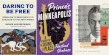
Publishing veteran Liz Frances started Street Noise Books in 2020 to publish graphic nonfiction and memoirs about important topics such as Palestine, environmental destruction, immigration, race, and sexuality. “In my experience, the big publishers would often shy away from subjects that might spark controversy,” Frances told PW. “They were doing a lot of books on important topics, but they were careful to have it always fit into an acceptable package that wouldn't cause too much uproar.”
Street Noise started strong with Jim Terry’s memoir Come Home Indio, named one of PW’s Best Books of 2020, and has racked up numerous award nominations and starred reviews since then. Recently, the publisher branched out into fiction with You Must Take Part in Revolution by the exiled Chinese cartoonist Badiucao and journalist Melissa Chan.
Frances is the sole full-time staffer at Street Noise, working with freelance editors to publish graphic novels that she describes on the company website as “Real books for people who give a damn.” We asked her how that’s going after more than five years.
What’s the status of Street Noise today?
Street Noise is going full throttle. I feel that the need for a platform for truth-telling and telling our own stories is even more important now than it was when I started the publishing house, with freedom of speech being threatened so openly and aggressively now. I want people to know that we are not backing down. And the book banning that is happening is making me even more motivated to make sure those stories are being told and people's voices are being heard. The current situation in this country and in the world has made me think of our work as not only ‘unapologetic, authentic, and politically relevant,’ which was our tagline when we started out, but I now also see Street Noise as engaging in what I like to call dissident publishing.
Street Noise is a solo operation, with no outside investors. Why did you choose to go that route?
When I started, I decided I didn't want to have investors, because I didn't want anyone else to weigh in on what I was publishing and why. I wanted to be able to say, ‘I'm going to take this risk, and I don't have to ask anyone else.’ Sometimes a book doesn’t sell very much, but I’m proud that it exists and it’s beautiful.
Who is your distributor, and are you reaching comic shops as well as bookstores?
Consortium is my distributor, and they do distribute to comic book shops. Because my background is in book publishing, I always consider myself a book publisher who does graphic novels. It’s still a struggle to get my books into comic shops, but we’re working on that because I think it’s a whole new market, a whole group of readers that would probably like Street Noise books if they knew about them.
How do you find books to publish?
I get a lot of submissions, not only from agents, but from people who've heard about Street Noise through the comics community or have met me at Toronto Comic Arts Festival or Small Press Expo. I carve out time to really pay attention to all of those submissions, because what I've found in the years that I've been publishing is that there are these sort of diamonds in the rough, and that people just need a little help, a little polishing, or a little guidance, to bring out their stories.
I read an interview where you said ‘I try to step back and listen to the points of view of people who have been marginalized.’ How did you do that, and what did you learn?
By that, I meant people who, even though I wanted to support them, I didn't know them. For a long time, I have been very supportive of trans rights and of human rights for all people, regardless of their gender identity or sexuality or the color of their skin, but it wasn't until I set out to meet people who walked in these shoes that I was able to see things differently.
I met Bishakh Som because I had set out to do this, and when she and I got to be friends, for the first time I really saw what it meant to someone to not be able to use the right restroom. I knew about these issues, but I felt like there was something different when you get to know someone. And so that's what I set out to do through Street Noise.