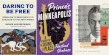
At this year’s Public Library Association conference, held in Minneapolis April 1–3, participants caught up with library tech, civic legislation, and colleagues. The premier biennial gathering of public librarians had 6,410 registrants as of closing day, and many of the sessions will remain available to screen on the virtual site.
PLA’s keynote presenters and education panelists conveyed the urgency of forging human connections and the importance of sustained critical thinking, in an age where busy people feel tempted to delegate decisions to AI. This central PLA theme was apparent in an April 2 morning presentation by Ruha Benjamin, author of Imagination: A Manifesto and founding director of the Ida B. Wells Just Data Lab at Princeton University.
“Public librarians are on the front lines of the battle over cognitive sovereignty,” Benjamin said, championing the freedom to read, write, and learn without impediment. She reminded attendees that technologies are “not neutral or objective, but a reflection of the values and interests of their creators,” some of whom “would have us believe that democracy is an outmoded software.” She cautioned against acquiescing to a culture of “surveillance and supremacy,” concerns much on the minds of librarians who guard privacy, and she proposed alternative terms for the AI acronym: Ancestral Intelligence and Abundant Imagination.
Benjamin asked a common tech question—“who owns the future?”—and suggested that the phrasing itself reveals an attitude of conquest. “We’re still taught to desire power over others instead of power with,” she said. “Another way of thinking about it is that we are trapped inside someone else’s imagination.” She encouraged creativity around the media we consume and share, and she touted strength in “solidarity and sacrifice, as we’ve witnessed in Minneapolis over these past many months.” PLA audience members snapped their fingers to affirm Minnesotans’ social cohesion and street-level public action.
In her 2019 book Race After Technology, well-known in library and information science circles, Benjamin coined the term “the new Jim Code” to suggest that our technological infrastructure can enforce societal inequities. Tech can operate on “a corrupt cultural code that we have the power to rewrite,” she insisted. She left listeners with advice from Toni Morrison—“As you enter positions of trust and power, dream a little before you think”—and she concluded with an allusion to Afrofuturist author Octavia Butler: “It may be the end of the world. But there are other worlds.”
Serious Play at PLA
PLA made space for imagination and recreation. At a session on “Measuring Summer Reading Success,” librarian Arnessa Dowell suggested a broad interpretation of reading formats and different incentives for reading including movie passes, ice cream cones, and even household appliances people need, “not tchotchkes.”
Creative sessions were complemented by nuts-and-bolts panels such as “Understanding First Amendment Rights for Everyday Change,” with presenters Dorcas Hand, MacKenzie Ledley, and Lisa Stevens discussing civic literacy and nonpartisanship in public libraries, and “Advocacy at the Core of ALA’s Next 150 Years,” at which ALA president Sam Helmick, president-elect Maria McCauley, executive director Dan Montgomery, and public policy associate executive director Lisa Varga talked about political goals.
Montgomery distinguished between advocacy, mobilizing, and organizing, “We’re at a time now when those three are being tested.” Varga spoke about the success of National Library Legislative Day in February, which brought 184 library advocates to Washington, D.C., to conduct 234 meetings with House and Senate leaders.
ALA is tracking the Right to Read Act, the Prison Libraries Act, and the Community Passport Access Services Act, the latter of which controls whether patrons can pick up passports at public libraries. Varga noted that while passports serve as everyday travel ID, constituents in conservative states such as Alabama have been concerned about restrictions to passport access.
Decolonizing the Menu
Indigenous food expert and Minnesotan Sean Sherman, who calls himself the Sioux Chef, served up PLA’s closing keynote. Sherman is a member of the Oglala Lakota Sioux tribe, born in Pine Ridge, S.D., and his latest book is Turtle Island: Foods and Traditions of the Indigenous Peoples of North America, coauthored by Kate Nelson and Kristin Donnelly.
Sherman related his personal story of becoming a chef, and cheers erupted when he mentioned his farm-to-table Minneapolis restaurant, Owamni, soon to be rebooted under a new name, Indígena by Owamni. “I didn’t go to culinary school, I just used books,” he said. “I knew hundreds of European recipes off the top of my head, but I didn’t know hardly anything about Lakota recipes.”
“I had the realization that my heritage just wasn’t there,” he continued. “Why did we lose so much?” When he began to research “pre-colonial foods,” he gradually learned how Native peoples across North American bioregions had sourced fats, sugars, and salts, preserved and cooked food, or stored seeds. “Federally sponsored genocide” and erasure of tradition, he explained, are among the reasons “why we don’t have Native American restaurants in every city everywhere.”
Public librarians and others now can find videos and educational resources at Sherman’s Indigenous Food Lab, which he described as “a vault” of data on Indigenous culinary and plant knowledge, soon to be expanded to Bozeman, Mont., and other cities outside Minneapolis.
“Plant knowledge helped me connect with my ancestry,” Sherman told the PLA audience, and he now intends to inform future generations. “How can we swing the pendulum toward humanity?” he asked, echoing PLA keynote speakers Benjamin and Just Mercy author Bryan Stevenson.
The next PLA will be held in San Francisco, March 13–15, 2028.