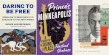
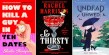
This year’s Miami Book Fair, which is runs November 16–23 in downtown Miami, is expected to attract more than 60,000 attendees. Between its robust Spanish-language program, children’s offerings, and street fair featuring more than 200 publishers and local vendors, executive director Lissette Mendez said the fair strives to offer something for everyone.
The fair has been around for more than 40 years now. How would you characterize the role it plays in Miami’s literary scene?
From the very first year, the idea was to have authors that represented our community here in Miami. Even when there were only 50 authors in 1984, a number of them were authors who wrote in Spanish—Miami has been home to a large Cuban community for a long time, and other Latin American communities have grown in recent years. As a matter of fact, the story goes that a Dade County public librarian on the team that founded the fair joined specifically because she wanted [the Cuban poet] Reinaldo Arenas to come speak in Miami—he was living in New York, but he had a lot of fans down here. One of the other members of that group was Mitchell Kaplan, who owns [the south Florida indie bookseller] Books & Books, and he’s still very involved.
It's not just about giving our community what they want, though. You know, they’re already here, so we can bring authors from cultures that are not predominant in South Florida onto their radar.
Speaking of, tell me a bit about how you select authors and curate the fair’s many events.
We work with a committee of folks from our community, whether they’re librarians, teachers, or people that we just know are good readers. Everyone takes a look at every book that we might be thinking about, and there’s a vetting process where we ask each other, “Is so-and-so going to be someone the people of Miami come out for?”
At the same time, I’m not always thinking about whether or not people will like an event. This year, Sally Mann, the photographer, has an evening presentation about a book of her work. At first, I was a little worried—Miami has a pretty strong art scene, but stuff really happens when Art Basel comes out here—and I’m like, “Well, you know, I think she’s great, and I think everyone should know about what her work means in American culture, so we’re gonna have her anyway.” But I checked today [the Friday before the fair], and we’re actually already almost at 400 tickets for that event!
We also very much like to support authors who are starting out, or who are very literary. Oftentimes, we’ll put a book with less name recognition with an author that has more name recognition and try to cross-pollinate.
Are there any other events you’re particularly excited about this year?
We have a panel with the writer Meenakshi Ahamed, who wrote Indian Genius: The Meteoric Rise of Indians in America, in conversation with George Packer and Todd Purdum about an American future in which immigrants are not welcome the same way that they were 10 or 20 years ago. What are we going to be losing? Books are not always as timely as newspapers, so we don’t have anything that addresses the particular challenges that immigrants have been facing in the past year, but Ahamed’s book allows us to take this very narrow subject and look at the immigration landscape from that point of view.
We’re also having Ted Schwartz talk about his book Gray Matters: Biography of a Brain Surgeon. I was fascinated by it—it talks about his work as a neurosurgeon but more so just about how fragile the brain is, how it does things immediately. I’m also really excited about Chaim Grade’s Sons and Daughters. It was first published in Yiddish the 60s, but was only just translated, and now it’s being hailed as the last great Yiddish novel.
What do you have planned on the Spanish-language side?
We have more than 30 presentations and over 75 authors from Spain, Cuba, Bolivia, Venezuela, Puerto Rico, Argentina, Mexico, Colombia, Chile, and the U.S.—a vibrant and diverse lineup of voices from across the Spanish-speaking world. I’m especially excited about two remarkable Cuban authors joining us this year: Wendy Guerra and Zoé Valdés. As someone with a Cuban background, their work and the history they explore resonate deeply with me. Wendy will be presenting La costurera de Chanel (The Chanel Seamstress), a book that masterfully blends reality and fiction while confronting some of Cuba’s most profound political and social wounds, and Zoé Valdés will share París era una rumba (Paris Was a Party), her tribute to the writers who shaped her during her years in Paris.
The fair also has a good number of non-literary cultural offerings. How do those fit in your mission?
For us, the fair is not just about making sure people are reading good books or participating in literary culture to expand their thinking; it’s about us being able to give everyone in Miami one week of the year where they can come out and enjoy a lot of different kinds of cultural activities, basically for free. Reading is entertainment, after all, though I think sometimes we forget that. You might want to come because there’s a great panel on politics, but you also like music or want a poke bowl. We have a big live music stage and work with Smorgasburg to set up a food village. Oftentimes we’ll also partner with the Miami Film Festival to do events.
On the kids’ side, it’s a way to make a connection in their minds between enjoyment and reading. We bring about 10,000 children on a field trip from their schools on Friday, and each of them gets a free book and an opportunity to see the way that literature works up close, in addition to participating in these other activities. For example, we have one area in the children’s pavilion called Create, where the kids do hands-on art related to specific books. It helps dispel the “yawn factor” that arises when you only talk about reading in the context of a library or school.