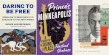
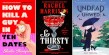
How are independent publishers that center marginalized authors and their stories weathering the current political climate? A common theme emerged among six presses PW spoke with, whether they’ve been around for decades or just a few years: all are undeterred by the challenges ahead. Or as Kameel Mir, associate editor at Feminist Press, puts it, “We remain a harbor for work we want to see represented in the world.”
Collective efforts
Feminist Press was founded in 1970 with a mission to “reinvigorate the feminist canon,” Mir says, by “finding voices that were suppressed or censored in the past, and reigniting discourse around them.” Works by new authors have become an important part of the mix, too. In February, the press’s Amethyst imprint is releasing A Body Made Home by Kai Marshall Green, a queer Black trans academic. In his debut, a memoir in the biomythography tradition of Audre Lorde, Green discusses his “transformation and transition over time from Baby Girl, as he calls his past self, to who he is now,” Mir explains, through meditations on his gender identity, sexuality, and family.
Fulfilling the press’s mandate while staying true to its ideals—“We define our feminism as anti-capitalist, anti-racist, and anti-imperial,” Mir says—means accepting funding only from what Feminist Press deems “ethical sources” whose values align with its own. The press opted against applying for a 2026 grant from the National Endowment for the Arts, says managing editor and development coordinator Rachel Page, “given the requirements to certify compliance with the DEI and gender identity executive orders. It was the first time in over a decade that Feminist Press hasn’t applied for NEA funding.” The plan is to compensate for the deficit through quarterly fundraising appeals and reader support, and the decision not to seek NEA funding, like others at the press, was made collectively by the staff.
Brooklyn’s Radix Printing and Publishing Cooperative was born of a merger between Radix, a one-person offset print shop in Portland, Ore., and OccuCopy, a print shop originating with the Occupy Wall Street movement. After joining forces with letterpress and design studio Wasp Poster and Print, Radix published its first title, the anthology Aftermath: Explorations of Loss & Grief, in 2018. Lantz Arroyo, one of the cooperative press’s worker-owners, says, “We prioritize work by first-time writers, people on the margins, and books that would not necessarily be considered at even one of the larger of the small independent presses.”
That means books including The Land Is Holy, an anti-Zionist nonfiction collection and 2025 Arab American Book Award winner by noam keim, a queer Arab Jew. Radix editor-at-large Meher Manda also cites works of fiction including Ahmad Nabil’s Hidden Companions, “a collection of ghost and supernatural stories from the Old City of Jerusalem” based on Palestinian folklore. It’s available in Arabic with an English translation forthcoming. The recently released Filipino anthology Signos, she says, highlights “a kind of horror and supernatural writing that Americans do not usually get access to.”
Like Feminist Press, Radix makes decisions collectively, and like any publisher today, it’s contending with rising paper costs and tariffs. Manda also alludes to cultural challenges, speculating that some publications shied away from reviewing The Land Is Holy because of its subject matter. Still, the work continues. “The press’s culture hasn’t changed, but we’re more responsive,” Manda says. “We want to speak to the moment with intentional and propulsive books.”
Street Noise Books founder Liz Frances says she launched the press in 2020 because she was “horrified by the hatred” that emerged during President Donald Trump’s first term. After publishing graphic nonfiction exclusively, Street Noise, which Frances says aims to “generate compassion” for diverse perspectives, expanded into graphic novels in 2025 with You Must Take Part in Revolution by artist and activist Badiucao and Emmy-nominated journalist Melissa Chan. It’s a “cautionary tale of authoritarian governments and surveillance” set in a future dystopian Taiwan and China, Frances notes. “It was right on target for what I wanted to say to the world now: What happens when people’s freedoms are taken away? How do we figure out what we’re willing to do to fight for our freedom?”
The spring lineup includes another work of fiction, War Poems (Apr.), a speculative graphic verse novel by Jamie Mustard and Corey Drayton that “examines how we demonize other people,” and Welcome to Hell by Mohammad Sabaaneh (May), a memoir of recent events in the West Bank and Gaza.
Even as she imagines worst-case scenarios in the wake of no-longer what-ifs, such as the defunding of public media in the U.S., Frances says she’s determined to carry on. “We’ll do this in the basement of my house, if we have to. We’ll figure out a way. There are millions of people who will all band together to make sure this good work continues.”
Broad reach
Multicultural children’s book publisher Lee & Low has been doing the work for 35 years. Its Diversity Baseline Survey tracks demographics in the publishing industry, and the biennial New Voices and New Visions Awards offer mentorship and publication to authors of color writing picture, middle grade, or YA books.
Restless Books, founded in 2013, also fosters developing talent, through its annual prize for new immigrant writing as well as workshops for immigrant writers. “As the U.S. political regime is trying to narrow down concepts of diversity, plurality, and inequality, Restless is giving them the space they deserve,” says cofounder and publisher Ilan Stavans, who is emboldened by the belief that now is the perfect time for his company to extend its scope and ambitions. “The health of small publishers throughout the country serves as a thermometer for how democracy is doing.”
A pair of anthologies, both due out in 2026, speak to the moment. A Compass on the Navigable Sea: 100 Years of World Literature, which Stavans calls an “antidote to the parochialism of the presidential administration,” pubs in February. A Nation Wrestles with God: American Prophets, Philosophers, and Firebrands, which Stavans edited, is out in April and will mark the country’s 250th anniversary while scrutinizing its official motto, “In God We Trust.” Also in April, Yonder—the children’s imprint Restless launched in 2017—will release the picture book Home Is a Door We Carry by Constantin Satüpo, which was inspired by children displaced by the war in Ukraine.
“We’re simply the ones bringing out the books,” Stavans says. “The independent bookstores put them in front of readers, and the readers carry them forward. It’s a small but powerful network of resistance.”
Third State Books is a general interest publisher of books for adults and children, founded in 2023 by Stephanie Lim and Charles Kim, that exclusively supports Asian American and Pacific Islander writers. Kim says that the press’s goal of providing “an authentic slice of Asian American life” hasn’t changed under the current administration; the urgency predates it. “There’s a very long history of Asian Americans not being able to tell the stories that felt genuine to them,” he explains. “Rather than acting as a conduit between these writers and readers, the publishing industry acts as an obstacle at many different points. We decided to be a for-profit public benefit corporation so that we could prove to the publishing industry that investing in Asian American writers and stories can be profitable.”
The press’s early children’s successes include Abigail Hing Wen’s The Vale, a middle grade adventure illustrated by Yuna Cheong and Brandon Wu; adult releases have run the gamut from Bollywood-inspired romp (Pallavi Sharma Dixit’s Edison) to true crime (Thien Ho’s The People vs. the Golden State Killer).
Kim says Third State is helping its writers occupy spaces where they’re underrepresented. June 2026 sees the release of Casually Yours, a debut rom-com by Vivian Jia Lac. “Romance is by far the most popular fiction category,” Kim notes, “and yet, according to the Ripped Bodice’s survey, only 11% of romance novels were written by people of color last year. For Third State, it’s a political act to publish romance.”
The same holds true at Generous Press, where cofounders Elaina Ellis and Amber Flame acquire what they bill as “lush, high-caliber” love stories from queer, BIPOC, and disabled writers. “Part of my activism and what I can offer to the world right now is this growing platform that’s subversively using love stories to change the world,” Flame says.
The press launched with 2024’s Someplace Generous: An Inclusive Romance Anthology, edited by Ellis and Flame. The 2026 catalog includes J.A. Stevens’s A Change of Pace (Jan.), which Ellis calls “Bridgerton for queers.” Struck Speechless (Apr.) is book two in Tati Richardson’s Boss Chicks Village series; Ellis says it “harkens to the 1990s golden era of Black romantic comedy.”
Flame, like others interviewed for this piece, sees publishing as a place of solace and a vehicle for action. “Instead of leaning into the fear, we’re leaning into what comes next—and we’re going to need stories.”
DW McKinney is a writer and editor in Nevada.