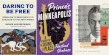
The publisher and cofounder of the Seattle-based Fantagraphics, which bills itself as “publisher of the world’s greatest cartoonists,” celebrates 50 years in business this year.
What made you first want to be a publisher, back in your 20s?
In 1976, I was prompted by my critique of American popular culture. We started by publishing a critical magazine, the Comics Journal. What a radically different and almost incomprehensible world it was then, vis-à-vis comics. We wanted to set mainstream comics, dominated by Marvel and DC, back on its heels. A few years later, more by happenstance than anything else, we decided to publish comics.
You publish some 100 titles annually. What’s the business model to that breadth?
One has to be tenacious in order to do this and survive for 50 years. Like every publisher, we face the challenge of publishing books that make a profit so we can also take risks on books we love. Those two priorities overlap most of the time. In the 1980s I came up with the slogan “publisher of the world’s greatest cartoonists,” which was arrogant and hubristic, but I think mostly accurate.
Were you also spoiling for a fight?
To annoy the right people was also one of our central goals—people who are indifferent to comics as an art form. I felt a moral obligation to resist and dissent—to strike a revolution in comics.
What makes a good comic?
We’re looking for a singular vision, interpreting the world in a rich and insightful way. We choose artists we admire. Once we commit to an artist, we’re usually in for the duration—I used to say to the end of my life. Now I should say to the end of their lives.
Read more from our spring 2026 comics & graphic novels preview feature.