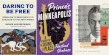
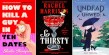
Without a doubt, the hottest thing on TV is Heated Rivalry, a Canadian import streaming on HBO Max about two closeted ice hockey players’ forbidden romance. Amid the show’s success, everyone’s asking: Who knew hockey could be so sexy? In fact, the publishing world knew—and for quite some time.
Heated Rivalry, which blew up last month, adapts the second book in Rachel Reid’s series of ice hockey–themed gay romance novels, Game Changers, published by Harlequin’s Carina Press imprint. The six-title series debuted in 2018, with a seventh installment set for this fall. But as Stacy Boyd, Reid’s editor at Harlequin, noted, “Hockey romance has been around for a while, so this is just sort of a surge in the interest.” Thanks to the show, Boyd said, Harlequin has “seen a growing appetite” for the genre.
Boyd chalks up much of the TV show’s success to fans of the books, who she says were “really energized and engaged from the beginning.” That energy has also translated into book sales: weekly print sales of Heated Rivalry shot up more than 8,000% between Nov. 30, 2025—right after the show premiered—and Jan. 17, 2026, per Circana BookScan. Sales of the Game Changers series also rose nearly 4,000% in the period, selling 206,000 copies. (The series has sold 228,000 copies in total.)
By the time Reid’s series came out six years ago, many readers had already been initiated into the ice hockey romance genre by Elle Kennedy’s Off Campus series, which follows hockey players at the fictional Briar University and has now sold more than 1.3 million print copies across five books. (Sales of the series have risen more than 125% since Heated Rivalry premiered.)
Kennedy self-published the series in 2015, and in 2021, Sourcebooks brought the Off Campus books to its Bloom imprint, by which point “there was a lot of activity around hockey romance in general,” said Christa Desir, Kennedy’s editor at Bloom. The imprint publishes more than a dozen hockey romances across multiple series written or cowritten by Kennedy.
With a TV adaptation of the Off Campus series now in the works at Prime Video, Bloom’s goal, Desir said, is “making 2026 the year of Elle Kennedy and hockey romance.”
Another pioneer of the genre is Hannah Grace, whose novel Icebreaker went viral on BookTok shortly after its release in 2023. The book, about a figure skater and hockey team captain forced to share a rink, has sold more than 1.6 million print copies.
“It’s really great to see it having a resurgence right now,” Kaitlin Olson, Grace’s editor at Atria, said of hockey romance. The key to the genre’s success, she speculates, “is that it’s really uniquely suited to many of the tropes that readers love,” such as enemies-to-lovers, alpha-male heroes, and grumpy/sunshine, not to mention “the competition element, which creates your stakes.”
Olson also noted that “a lot of hockey romance tends to be a little more spicy or explicit.” The genre’s eroticism makes it all the more revolutionary that a gay romance like Heated Rivalry—which is indeed “spicy”—has broken into the mainstream.
In the past, Desir said, gay romance “was considered more niche, and it was very provocative.” The 2015 gay hockey romance Him by Kennedy and Sarina Bowen, she noted, was the first queer narrative to win the Romance Writers of America’s RITA Award.
Since then, according to Desir, a lot has changed, with Gen-Z readers having grown up with queerness being more openly discussed and accepted: “In some ways, it’s like a lot of the toothpaste already came out of the tube—there’s no going back.”
Harlequin’s Carina imprint has become a leader in queer romance—which as a category has seen sales more than triple between 2021 and 2025—and particularly in queer sports romance, with such offerings as hockey series by Ari Baran and Kate Cochran, as well as sapphic bowling and basketball novels by Karmen Lee and Meka James, respectively.
For Olson, as far as drawing readers to queer romance goes, “you don’t get any better than a TV show that people are consistently watching,” like Heated Rivalry. “It’s a revolutionary show in a lot of ways,” she said, “and I hope we see more of that.”