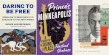
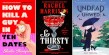
A film adaptation sparking sales of its source isn’t unusual. Sales of Peter Benchley’s Jaws spiked after Steven Spielberg’s 1975 blockbuster; the 2001 release of Chris Columbus’s first Harry Potter film caused a huge sales bump for the already massively popular book; and when The Hunger Games hit theaters in 2012, appetite for the books was insatiable.
While this phenomenon persists, the way people watch movies has changed. Netflix may not have been the first streamer, nor the first to make original content, but it is unique in its success. Indeed, its breakthrough original series and film—House of Cards (2013) and Beasts of No Nation (2015)—are adaptations of books and ushered in the era of optioning for streaming.
By the end of 2025, book adaptations totaled more than 4.5 billion global views, according to Netflix. Moreover, adaptations appeared on the platform’s global top 10 lists every week of the year. But viewers aren’t satisfied just watching the Netflix versions—they’re purchasing those books too. The thrillers that Netflix adapted into the films Bird Box (2018) and Leave the World Behind (2023) have both seen sales boosts. But adaptations of classics and critically acclaimed books are a different story. They might win Oscars, but juice book sales? Not so much.
One recent outlier is Guillermo del Toro’s retelling of Mary Shelley’s Frankenstein. Penguin Random House, publisher of a tie-in edition of the horror classic, reported a surge in sales after the film’s November 7 release.
It’s apparent Netflix won’t be switching up its formula this year, which should bode well for publishers of some adapted books. Debuting at #1 on the streamer’s global top 10 on January 9, the Brett Haley adaptation The People We Meet on Vacation by Emily Henry amassed 17.2 million views during its first weekend. Within two weeks, according to Benjamin Lee, SVP for backlist at Penguin, sales nearly doubled across all formats. Henry’s built-in audience helped, but the movie also hooked new fans. “Netflix obviously has a huge audience worldwide, so any marketing they do will reach potential new readers, and that’s exciting for any author,” says Mary Pender, Henry’s media rights agent at WME.
This year, Netflix is going beyond BookTok, adapting classic romances by Edith Wharton and Jane Austen, as well as Julia May Jonas’s critically acclaimed 2022 novel Vladimir, about a sex scandal on a college campus.
Leaning into literary prestige has historically gained the streamer entrée to awards season. In recent years, Netflix adaptations have racked up nominations, including The Irishman (2020) and All Quiet on the Western Front (2023). Alongside Frankenstein, Train Dreams, based on a 2011 novella by Denis Johnson, is vying for Best Picture at this year’s Oscars.
But prestige pictures don’t generate the same sales boost as more commercial offerings. According to Circana BookScan, All Quiet on the Western Front, based on Erich Maria Remarque’s 1929 anti-war epic, sold 5,104 copies combined in mass market and trade paperback formats in the three weeks between Oct. 23 and Nov. 5, 2022—the former being the week it began its limited theatrical run, the latter the week after its Netflix debut. That’s all of 1,300 more copies sold than in the preceding three weeks.
Another prime example is The Lost Daughter, Maggie Gyllenhaal’s 2021 directorial debut, based on the 2006 Elena Ferrante novel of the same name. Though it received three Oscar nods, that buzz wasn’t enough for Europa Editions, the book’s publisher, to get its hopes up.
“The movie gave us an excuse to re-jacket and relaunch this key title in Ferrante’s oeuvre, and a reason to keep promoting it from the backlist,” says Michael Reynolds, Europa’s executive publisher. “The new edition had a good couple of weeks upon release, which corresponded with the movie’s release. But sales leveled out and have been in line with what we might expect from a Ferrante standalone title.”
As Netflix straddles commercial vs. prestige, book sales tend to scale with the size of the audience. What hits could be a rom-com about two friends, or an internet boyfriend playing Frankenstein’s monster. Adaptations help, but they’re no sales guarantee.