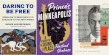
It might have been an internet search for keywords "Jewish" and "queer," or finding a branded sticker affixed to a bus stop, or a suggestion that came from a trusted adult. No matter how they found it, hundreds of Jewish LGBTQ+ young adults ages 13 to 23 have found their way to the website, social media, or New York City drop-in site for the nonprofit Jewish Queer Youth.
JQY is a nonprofit offering a curated online book club, mental health services, holiday events, and programs for queer, trans, and gender non-conforming youth. Most of all, say JQY staff and participants, it's a community of people, online or in person, who are bridging their faith and gender identities. While some branches of Judaism accept LGBTQ people, those who grow up in the most strictly observant branches of Orthodox Judaism, which are historically not accepting, often feel isolated.
"Our mission is to equip Jewish queer youth to survive and thrive," said executive director Rachael Fried. "Imagine a room full of people who all thought they were the only ones like them."
JQY's staff of nine, working with a $2.2 million budget, serves 11,000 people across the U.S. and abroad through its mailing list. It also counts approximately 6.9 million views across social media platforms over the past five years.
The drop-in center, established in 2016, attracts 30 to 50 youth a week for talks, parties, classes, and kosher snacks, as well as a fully-stocked library. There are also staffers to help with crisis management and mentors who can teach such adulthood skills as opening a bank account or job hunting, as many struggle to find such guidance in their home communities, said clinical director Jeremy Novich.
The book club is one of the key features of JQY's mission of building community, which Fried says "is the crux of what we do." Every month, the JQY Book Club offers a title that mailing list subscribers can request free by mail or pick up at the drop-in center. Readers can offer their comments through the JQY App on Apple or Android.
While scores of JQY youth choose books each month, the organization is looking to ramp up the numbers, according to Maris Krauss, JQY's expansion and college program manager. Krauss said the club is considering moving to a subscription model where everyone registered with JQY will automatically receive a book every month unless they choose to opt out. They are also in the process of setting up Zoom book club meetings and talkback events, including some where the author will join in.
The club's low barrier to entry is essential to its value, said Fried. "You don't actually have to show up anywhere or give anyone your name outside of the organization, to discover you are part of a community, you're reading what others are reading," she said. "They may find a story that is about someone that maybe they can relate to in a way that they didn't know before."
For book club participant Aviezer S., the program has offered a much-wanted place of belonging. A 22-year-old queer college student from an Orthodox background, he found JQY through an Instagram search nearly three years ago. He was looking for a community that bridged his two identities, saying, "I had difficulty as a child finding an actual space where these identities intersected and both were welcomed."
Through the JQY Book Club, he's read more than a dozen of the books. From their 2025 book list, Aviezer said he particularly liked The Papercutter by Cindy Rizzo (Bella Books). One of the three main characters is a teenager living in an Orthodox community with a talent for the art of papercutting and the unique ability to look into someone's soul to tell if they are good or evil.
A fan of sci-fi and fantasy titles, he says another favorite was Rabbi Leiah Moser's self-published title, The Magical Princess Harriet. It delves into Jewish mysticism and features an angel who asks a trans character for help saving their middle school from encroaching darkness. "It was a bit of a deviation from the typical you-have-to-save-the-world plot," he says, "but it was very enjoyable."