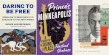
In the effort to control what’s read in schools and libraries around the country, books with inclusive themes and diverse characters have become a flash point. Meanwhile, a vast majority of teachers view inclusive literature as important and want to use these books with their students. That’s according to a recent survey by the National Council for Teachers of English, which offers insight into how books are used in U.S. classrooms and the challenges teachers face in integrating texts to enhance learning and, most importantly, foster passionate readers.
There’s much to parse in the survey results. For one, the most frequently taught books in secondary English classes have remained largely unchanged for decades. However, even in the face of book challenges, ever-shrinking budgets, and politically charged school districts, educators are seeking inclusive literature. It’s an opening for the publishing community, libraries, and local organizations to aid teachers.
Of the 4,000 secondary educators polled by NCTE, 95% affirm that it’s “important for children to study diverse literature, that students can build positive self-esteem by seeing themselves in diverse literature, and that reading diverse literature facilitates understanding of diverse perspectives and can increase awareness about important social issues,” according to “The State of Literature Use in U.S. Secondary English Classrooms,” released in July. Moreover, the benefits of inclusive books are supported by research spanning decades.
The irony presented by the survey results is not lost on Rex Ovalle, chair of NCTE’s secondary section steering committee, and an English teacher at Oak Park and River Forest High School in Illinois. “Despite the overwhelming body of research showing that if we open up the stories, books, texts that we offer our students and try to make them more inclusive in terms of experiences and voices, that it leads to more engaged reading,” he says, “we still haven’t made enough progress.”
So what are the most taught texts in U.S. classrooms? Romeo and Juliet is number one, followed by The Great Gatsby and The Crucible, according to the NCTE survey. Macbeth, listed fourth, was among the top 10 in 1989, as it was 25 years earlier, in 1964. The fact that students today are very likely reading the same books that their parents and grandparents did is concerning, says Tonya Perry, NCTE president and provost and VP of academic affairs at Miles College in Fairfield, Ala. “There are so many more rich texts that are high engagement and reflect the lives of the students we work with each day in the classroom.”
Helping Teachers Help Readers
Scripted curricula and legislation restricting book selection notwithstanding, about four out of five teachers reported having choice in the texts that they use. What they lack is the space to maximize that agency. “Teachers are stretched to the limit,” says Mary Ann Cappiello, a professor of language and literacy in the Graduate School of Education at Lesley University in Cambridge, Mass. With district requirements, cuts to support positions, and the stresses imposed in our political climate, educators are hard-pressed to read, much less relate texts to curriculum development. That happens mostly on the fly, she says.
So how can publishers help teachers access relevant, inclusive titles and maybe shake up those tired book lists?
To serve teachers, think backlist. “Is there a way to promote backlist titles for the school setting, while promoting new and upcoming books?” Cappiello asks of publishers. “For a high school English teacher, a YA novel released in 2018 is probably still new to them.” And those titles would likely be available in the school or public library. Curation could center on curricular themes—and in conversation across publishers (that’s the dream, anyway).
Publisher-produced teacher guides, designed to provide curricular support for select titles, could use an upgrade. Keyed to literacy expectations of the Common Core, which inform state literacy standards, these all start to feel the same, Cappiello observes. Publishers should instead focus on how to use their titles with other texts (think Romeo and Juliet, The Great Gatsby, and others from the list of oldies still in use). Also, “addressing a rationale for a newer book’s place in a classroom would be helpful for teachers,” she says, especially those who might otherwise be reluctant to use it.
Teachers also need ongoing professional development about how to teach inclusive texts, Perry says. While anti-LGBTQ+ legislation and a culture of intolerance may contribute to teachers’ reported reluctance around using books with LGBTQ+ themes and characters, Perry leans into professional development to foster dialogue among educators, which in turn can open doors for young people through books. “Diverse texts address issues that students know about, care about, or heard about already,” she says. By providing access to literature, teachers are enabling students to apply their own critical thinking. One-and-done won’t cut it, she adds. “PD must be ongoing,” so that teachers can build a cohort as they develop skills to teach diverse content.
NCTE offers tools to help teachers choose which books to include in their curricula, such as its Book Rationale database, with support for 1,400 titles thus far. NCTE membership is required to access the full inventory; however, anyone can view sample rationales, and a template enables teachers to customize or create their own. Rationales help model decision-making on books to use in the curricula, so educators can decide together as a team, instead of having to go it alone. Perry suggests rationales as a springboard for further discussion about titles outside school—at a local bookstore, for example, or community center.
Teachers can start by using short stories, Ovalle says. “That’s often the fastest way to explore a particular voice to see if that perspective would go well with the students.” While committing to a novel study might require four to six weeks, a short text can be readily pushed out to students through Google Classroom or PDF, read and discussed, and enable the teacher to decide if something clicked with kids, all in the space of a couple of days. Or, “for a couple of years, it works and then it’s like it just doesn’t hit with students anymore,” says Ovalle, who ends up replacing half of his short story units every year.
Another option is shifting classrooms to book clubs, with titles thematically linked or connected by genre or subject. That way “it becomes less of a high-stakes decision to bring in more diverse texts and maybe feels more manageable” while facilitating student choice, Cappiello says.
Teachers, like many of us, could be reading more themselves. “There needs to be a kind of protected space for teachers to just read, to read capaciously,” Ovalle says. He describes his teacher cohort as a community of people engaged with books, sharing and discussing what they’ve read, and trading ideas on how to bring this content into the classroom. The implication of these animated gatherings: inspired teachers who inspire young readers in turn.
To the larger picture, when we support teachers, we support kids, challenged as we all are by digital distraction and a culture in which information and knowledge are devalued in the public sphere. “How do we support young people in holding on to their own deep thinking?” Cappiello asks. “How do we develop the habits of mind to cultivate deep reading? Deep reading causes deep thinking, and that’s the only thing that’s going to save us as a society.”
Kathy Ishizuka is the former editor-in-chief of School Library Journal.