Top 10
1873: The Rothschilds, the First Great Depression, and the Making of the Modern World
Liaquat Ahamed. Penguin Press, June 2 ($32, ISBN 978-1-59420-417-3)
The bursting of the first global economic bubble led to the failure of Reconstruction, the decline of the Ottoman Empire, and an explosion of antisemitism, according to the Pulitzer-winning author of Lords of Finance.
A Country of Lords: Neo-Aristocrats, Social Darwinists, Tech Utopians, and the Long Fight Against Equality in America
Kimberly Phillips-Fein. Norton, July 21 ($35, ISBN 978-1-324-07444-1)
The Pulitzer finalist charts the long history of the American political conviction that all people are not created equal.
Data Empire: A Human History of Records and Rule
Roopika Risam. Harper, July 14 ($35, ISBN 978-0-06-343032-7)
Data has been key to political control for the past 11,000 years, argues historian Risam.
Fear and Fury: The Reagan Eighties, the Bernie Goetz Shootings, and the Rebirth of White Rage
Heather Ann Thompson. Pantheon, Feb. 10 ($35, ISBN 978-0-593-70209-3)
Pulitzer winner Thompson portrays the 1984 subway vigilante shooting as an act of rage that kicked off a wave of white radicalization.
Here Where We Live Is Our Country: The Story of the Jewish Bund
Molly Crabapple. One World, Apr. 7 ($30, ISBN 978-0-593-22945-3)
Artist Crabapple delves into the history of the Bund, an anti-Zionist Jewish socialist party that was a powerful political force in Eastern Europe ahead of WWII.
The Lost Cities of El Norté: Coronado’s Quest, the Unconquered West, and the Birth of American Indian Resistance
Peter Stark. Mariner, Apr. 14 ($35, ISBN 978-0-06-338388-3)
Astoria author Stark recaps how, after defeating the mighty Aztecs, the Spanish were surprisingly trounced by the nomads of the Great Plains.
Not Built in a Day: How Slavery Made the Roman World
Emma Southon. Simon & Schuster, June 30 ($30, ISBN 978-1-6680-8955-2)
Classicist Southon explores the lives of Rome’s enslaved, arguing that they were responsible for the empire’s achievements.
The Perfect Moment: Art, Censorship, and the Forgotten Origins of the Modern Culture Wars
Isaac Butler. Bloomsbury, June 23 ($31.99, ISBN 978-1-63973-349-1)
Today’s culture wars can be traced to a 1988 attempt by Pat Buchanan and other conservatives to stir up moral panic about contemporary artists like Robert Mapplethorpe, according to the author of The Method.
Traversal
Maria Popova. Farrar, Straus and Giroux, Feb. 17 ($36, ISBN 978-0-374-61641-0)
Popova examines history’s writers and thinkers who emerged from the margins into the limelight, among them Mary Shelley and Frederick Douglass.
The War Within a War: The Black Struggle in Vietnam and at Home
Wil Haygood. Knopf, Feb. 10 ($35, ISBN 978-0-593-53769-5)
Profiling prominent Black men and women of the Vietnam War era, the bestselling author of The Butler draws parallels to today’s political and racial divisions.
longlist
Atlantic Monthly Press
A God-Shaped Nation: Five Hundred Years of Religion in America by Brook Wilensky-Lanford (June 9, $35, ISBN 978-0-8021-6734-7) argues that belief in the freedom of religion has been a pivotal force at key moments of both division and unity in American history.
Basic
The Long Revolution: Creating a United States After 1776 by Nathan Perl-Rosenthal (June 2, $30, ISBN 978-1-5416-0663-0) draws on early 19th-century Independence Day speeches to show that Americans considered their revolution still in progress more than half a century after it began.
Belknap
Hubris: Pericles, the Parthenon, and the Invention of Athens by David Stuttard (Mar. 17, $29.95, ISBN 978-0-674-25847-1) reframes Athens’s supposed golden age as a period of fractious culture war over the Parthenon, which many, including Pericles, considered prostate propaganda and an offense to the gods.
Bloomsbury
The Biggest Lie: The Prehistory of American Fascism, 1818–1915 by Joseph Kelly (July 21, $32.99, ISBN 978-1-63973-211-1) traces the roots of the Nazi-aligned American fascism that reared its head in the 1930s back to the racial ideologies of the antebellum South, Jim Crow, and the Spanish American War.
The Secret War Against Hate: American Resistance to Antisemitism and White Supremacy by Steven J. Ross (Apr. 28, $32.99, ISBN 978-1-63557-800-3) profiles the activists who infiltrated and brought down terroristic, homegrown American hate groups that sprouted up after WWII.
Broadleaf
Remembering Roots: How an American Classic Transformed the World by Lucas L. Johnson (June 16, $25.99, ISBN 979-8-88983-512-7) explores the lasting impact of Alex Haley’s 1976 novel, Roots, and its 1977 TV miniseries adaptation on how America reckons with its past.
Counterpoint
Empire of Skulls: Phrenology, the Fowler Family, and a New Nation’s Quest to Unlock the Secrets of the Mind by Paul Stob (Apr. 14, $30, ISBN 978-1-64009-683-7) recounts how 19th-century siblings Orson, Lorenzo, and Charlotte Fowler first popularized phrenology as a self-help movement before it became associated with eugenics.
Dey Street
The Price of Exclusion: The Pursuit of Healthcare in a Segregated Nation by Nicole Carr (June 16, $30, ISBN 978-0-06-328812-6) spotlights pioneering Black medical professionals in America’s past and shows how the barriers Black doctors have historically faced have contributed to racial inequality in the healthcare system today.
Doubleday
Freedom Round the Globe: A World History of the American Revolution by Sarah M.S. Pearsall (May 26, $35, ISBN 978-0-385-54871-7) argues against the notion that the revolution was a moment of American exceptionalism, demonstrating that revolutionary fervor, particularly against the British empire, was widespread in the 18th century.
Stolen Revolution: Betrayal and Hope in Modern Iran by Yeganeh Torbati and Bozorgmehr Sharafedin (June 2, $35, ISBN 978-0-385-55031-4) profiles six dissident Iranians across five decades, from the 1979 revolution to the 2022 Woman Life Freedom protests.
Dutton
The Death of Trotsky: The True Story of the Plot to Kill Stalin’s Greatest Enemy by Josh Ireland (Feb. 24, $35, ISBN 978-0-593-18710-4) provides dual biographies of Leon Trotsky and his assassin, Ramón Mercader, a Spanish aristocrat turned Soviet secret agent, as their lives bend toward the fateful act.
Obstinate Daughters: The Rebels, Writers, and Renegade Women Who Ignited the American Revolution by Denise Kiernan (June 23, $32, ISBN 978-0-593-18343-4). The bestselling author of The Girls of Atomic City highlights the contributions of women during the Revolutionary War.
Farrar, Straus and Giroux
Chasing Lewis’s Monkeyflower: The Amazing Afterlife of the Lewis and Clark Expedition’s Wild Plants by Elizabeth Adelman (July 1, $28, ISBN 978-0-374-61502-4) charts the circuitous path through history taken by Lewis and Clark’s plant specimens in the centuries after their expedition.
Safe Passage: The Untold Story of Diplomatic Intrigue, Betrayal, and the Exchange of American and Japanese Civilians by Sea During World War II by Evelyn Iritani (Mar. 10, $32, ISBN 978-0-374-26107-8) examines the complex human and moral drama behind a 1943 exchange of civilians between Japan and the U.S., including some who were repatriated against their will.
Graywolf
Outcast: A History of Leprosy, Humanity, and the Modern World by Oliver Basciano (July 7, $19 trade paper, ISBN 978-1-64445-406-0) posits that leprosy is the world’s foundational stigma, a justification for exile and ostracism that shaped later colonial and exclusionary forces of the modern world.
Without Terminus: Untraining an Archive by Chaun Webster (June 2, $18 trade paper, ISBN 978-1-64445-392-6) explores the ways structural anti-Blackness in the past shapes the present, including reflections on how the author’s own life was altered by the fact that his grandfather, a Pullman porter, was denied his pension.
Harper
Lost Worlds: How Humans Tried, Failed, Succeeded, and Built Our World by Patrick Wyman (May 5, $28.99, ISBN 978-0-06-325648-4) contradicts tidy notions of humanity’s prehistoric progress from anarchic hunter-gathering to hierarchical state-run agriculture by showing how much of early human society was the result of trial and error.
Treasured Island: The Story of St. Barth... and Its Barbarians, Billionaires, and Beauties by Michael Gross (June 16, $32, ISBN 978-0-06-341096-1) chronicles the past three decades of social life on the Caribbean island of St. Barthélemy, an exclusive haven for the world’s moneyed elite.
Harvard Univ.
What God Kept for Himself: Atheism, Sodomy, and Radical Dissent in Renaissance Italy by Umberto Grassi
(Feb. 17, $35, ISBN 978-0-674-30286-0) draws on never before studied Inquisition trials to reveal ways in which discussing anal sex functioned as a form of atheistic protest against religion in Renaissance Italy.
Haymarket
The Conviction Machine: Prosecutors, Politicians, and Police Violence in Chicago by Flint Taylor (May 19, $24.95 trade paper, ISBN 979-8-88890-592-0) traces institutional connections between two notorious episodes of anti-Black police violence in Chicago history, the 1969 assassination of Fred Hampton and the police torture scandal of the 1990s.
Footprints: A Black Journalist’s Fight Against Apartheid in South Africa and in Exile by Lionel and Liz Morrison (June 9, $23.95 trade paper, ISBN 979-8-88890-594-4). In this posthumous account, Lionel Morrison, a co-defendant of Nelson Mandela’s in the 1956 Treason Trials, recollects the antiapartheid struggle.
Holt
A Terrible Intimacy: Interracial Life in the Slaveholding South by Melvin Patrick Ely (Apr. 14, $31.99, ISBN 978-1-250-38111-8) explores intimate relations between enslaver and enslaved in the antebellum South, arguing that white Southerners acknowledged Black people’s full humanity even as they maintained their inhumane right to own them.
Island
Thundering Waters: The Toxic Legacy of Niagara Falls by Christen E. Civiletto (Apr. 30, $35, ISBN 978-1-64283-416-1) reveals that high rates of cancer now plague the region surrounding Niagara Falls due to the electrochemical companies like DuPont that sprouted up there in the early 20th century.
Knopf
Korean Messiah: Kim II Sung and the Christian Roots of North Korea’s Personality Cult by Jonathan Cheng (Apr. 14, $36, ISBN 978-1-5247-3349-0) contends that the cult of personality around Kim Il Sung and his descendants has its roots in America’s post–Civil War Christian fervor, which was exported to Pyongyang by missionaries.
Little, Brown
End of Days: Ruby Ridge, the Apocalypse, and the Unmaking of America by Chris Jennings (Feb. 10, $30, ISBN 978-0-316-38194-9) argues that the strain of doomsday Christianity that animated the white separatist Weaver family during the 1992 Ruby Ridge standoff has its roots in 1870s America, and that this thinking similarly motivates Trump-era conspiracy politics.
The People Can Fly: American Promise, Black Prodigies, and the Greatest Miracle of All Time by Joshua Bennett (Feb. 3, $30, ISBN 978-0-316-57602-4) charts the complex role of Black prodigies and gifted children in American history, including by tracking the early educations of luminaries ranging from Malcolm X to Stevie Wonder.
Liveright
Radical Duke: How One Aristocrat and the American Revolution Transformed Britain by Danielle Allen (June 16, $37.50, ISBN 978-1-63149-755-1) draws on newly revealed archival materials to argue that the American Revolution was fomented in large part by the clandestine work of English peer Charles Lennox and his associate Thomas Paine.
Stealing America: The Hidden Story of Indigenous Slavery in U.S. History by Linford D. Fisher (Apr. 28, $39.99, ISBN 978-1-324-09495-1) brings to light the history of Indigenous slavery in the Americas, which began before 1619 and persisted even when outlawed, with slaveholders intentionally misidentifying Native slaves as Black.
Mariner
A Second Sight: How the Wonder and Vision of Black Mediamakers Push America Toward Freedom by Sarah J. Jackson (June 9, $32, ISBN 978-0-358-72650-0) argues that Black journalists, photographers, filmmakers, and radio broadcasters have shaped America’s democratic ideals.
McClelland & Stewart
Go-Between Girl: My Indentured Roots as Reclaimed Present by Andrea Gunraj (Apr. 14, $26, ISBN 978-0-7710-2034-6) spotlights the lesser-known legacy of indentured servitude that lingers in the histories of families throughout the global Indian diaspora.
Melville House
The Book That Taught the World to Orgasm and Then Disappeared: Shere Hite and the Hite Report by Rosa Campbell
(Apr. 14, $32, ISBN 978-1-68589-231-9) resurfaces the story of Shere Hite, who authored a little-remembered 1976 bestseller about the female orgasm that revolutionized how people thought about marriage and sex.
Morrow
Dangerous Shore: How a Motley Crew of Scientists, Mobsters, Double Agents, Retirees, Volunteer Pilots (and a Boy Scout) Stopped the Invasion of America by Sara Vladic (Mar. 10, $32, ISBN 978-0-06-332104-5). The bestselling author of Indianapolis profiles a ragtag group who repelled U-boat attacks on the East Coast during WWII.
New York Review Books
From the Front Line: Stalingrad-Treblinka-Berlin, 1941–1945 by Vasily Grossman, trans. by Robert and Elizabeth Chandler (Apr. 14, $22.95 trade paper, ISBN 979-8-89623-008-3), presents the Soviet writer’s war reporting, drawing from newly unearthed drafts not yet altered by censors.
Norton
Black Evidence: A History and a Warning by Candis Watts Smith (Mar. 3, $31.99, ISBN 978-1-324-12476-4) examines the
long history of Black testimony being ignored and buried, and the ways in which not believing Black people has been part of a larger antidemocratic project.
One Signal
The Free and the Dead: The Untold Story of the Black Seminole Chief, the Indigenous Rebel, and America’s Forgotten War by Jamie Holmes (Feb. 3, $30, ISBN 978-1-6680-5061-3) revisits the 1835 American attack on the Seminoles of Florida, with a focus on the Black leader Abraham and the Creek warrior Osceola who led the resistance.
Other Press
Biography of a Dangerous Idea: A New History of Race from Louis XIV to Thomas Jefferson by Andrew S. Curran (Feb. 10, $39.99, ISBN 978-1-63542-224-5) explores how 14 Enlightenment figures shaped the concept of race, among them thinkers like Voltaire and Adam Smith, as well as political leaders like the Mughal emperor and the Sun King.
Penguin Press
Five Bullets: The Story of Bernie Goetz, New York’s Explosive ’80s, and the Subway Vigilante Trial That Divided the Nation by Elliot Williams (Jan. 20, $32, ISBN 978-0-593-83370-4) reinvestigates the 1984 shooting of four Black teenagers on a New York City subway train, and explores the public’s divided response as a precursor to today’s debates about race, crime, safety, and the media.
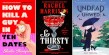
A Scandal in Königsberg by Christopher Clark (Mar. 10, $27, ISBN 979-8-217-06094-8) recounts the 1835 Prussian trial of two Lutheran preachers accused of starting a cult, pinpointing it as the moment the Age of Reason gave way to a new age of misinformation and fanaticism.
Random House
American Struggle: Democracy, Dissent, and the Pursuit of a More Perfect Union: An Anthology by Jon Meacham (Feb. 17, $38, ISBN 978-0-593-59755-2) collects speeches and writings that highlight moments when either division or unity was being advocated by American luminaries, ranging from Martin Luther King Jr. and Walter Cronkite to Bill Clinton and Barack Obama.
Kingdom of Devils: A Tale of Murder in the Shadow of the American Revolution by Katherine Grandjean (June 9, $33, ISBN 978-0-593-72993-9) recaps the murders committed along the western frontier in the 1790s by Wiley and Micajah Harp, America’s first serial killers, identifying volatile markets as a root cause for the anger that fueled the killing spree.
Seven Stories
Before the Flood: A Gaza Family Memoir Across Three Generations of Colonial Invasion, Occupation, and War in Palestine by Ramzy Baroud (Feb. 3, $22.95 trade paper, ISBN 978-1-64421-528-9) delves into the history of the author’s ancestral village, Beit Daras, which was depopulated and largely destroyed in 1948 by Israel.
Simon & Schuster
Freedom Lost, Freedom Won: A Personal History of America by Eugene Robinson (Feb. 3, $30, ISBN 978-1-9821-7671-6). The Pulitzer Prize winner charts five generations of his family’s successes and setbacks, beginning with his great-great-grandfather who bought his own freedom ahead of the Civil War.
Our Minds Were Always Free: A History of How Black Brilliance Was Exploited—and the Fight to Retake Control by Lisa E. Davis (May 19, $29, ISBN 978-1-9821-7599-3) analyzes how African Americans’ historical lack of access to the protections of intellectual property law contributed to today’s racial wealth gap.
St. Martin’s
The Feather Wars: And the Great Crusade to Save America’s Birds by James H. McCommons (Mar. 17, $33, ISBN 978-1-250-28689-5) recaps the sympathetic shift in the American public’s attitude toward birds after the early 20th-century extinction of the passenger pigeon, when a disparate but broad range of figures began calling for birds to be protected.
The Secrets of Eaton Square: Sex, Scandal, and Infamy on the Road to Buckingham Palace by Alexander Larman (June 2, $31, ISBN 978-1-250-38125-5) chronicles the sordid private lives of the wealthy residents of London’s Eaton Square over the course of three centuries, including artists, politicians, and royals, among them Margaret Thatcher and Diana Mitford.
This article has been updated.