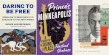
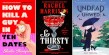
A growing number of Christian fiction publishers are seeing strong sales for "dual-timeline" or "time-slip" novels, in which the characters and plots crisscross between time periods decades or even centuries apart. Some of these novels qualify as “clean” fiction, free of sexy scenes and overt religious language, while other offer clear salvation messages. Regardless, they profess timeless Christian values in a unique way.
No matter the nomenclature, the genre is growing. “Dual-timeline novels give readers two immersive settings for the price of one,” Rachael Betz, associate marketing manager for Bethany House, said. “As a publisher, that’s exciting because you’re getting an experience that multiplies the emotional stakes.”
She points to the success of Gabrielle Meyer’s Timeless series, at more than 130,000 copies sold. The series has 10 books planned, with the seventh, Into a Golden Era, releasing in May. The novels feature time-crossers, characters who slip between two eras and must choose between them in the end. Into the Golden Era, for example, features Ally who lives in either in 1849, during the Gold Rush in California, or in 1929, the Golden Age of Hollywood.
Meyer’s “readership continues to expand with every new release,” says Betz. “This tells us that readers are championing these stories.” One of Meyer's titles, In This Moment, was among the Evangelical Christian Publishers Association's 2024 Christy Award winners given to novels that feature faith.
Other publishing houses such as Kregel have also found success with dual-timeline books. Amanda Wen has become a particularly popular dual-timeline author for Kregal. Her latest book, the split-time romance Echoes of a Silent Song (out now), is set in the present day and the 1970s, and her next book in the subgenre will release in early 2027. According to Kregel assistant marketing manager Sarah Cross, the publisher has more dual-timeline books "in the pipeline for the future.”
Spiritual tests in every era
Bethany associate marketing manager Bria Conway cites the success of Jaime Jo Wright, a Christy Award winner whose dual-timeline novels have sold more than 175,000 copies, as “a testament to the strong readership this subgenre has built.”
In Wright’s forthcoming novel, The Bookshop of 99 Doors (Apr.), spiritual warfare plays a role in a story of tested faith. The story is set in 1888 and the present day and features two women contending with paranormal events in the same Pennsylvania mansion.
“I found that writing dual-time was a creative way for the past’s ‘ghosts’ to visit the present by way of memories,” says Wright. “I was attracted to the concept of being able to somehow go back in time and witness what happened, and then have the gift of being present today to see how those circumstances affected those who came long after.”
Bestselling and OG historical fiction author Lynn Austin, named to the Christy Award Hall of Fame in 2013, also turned to dual-timelines for her latest novel, The Lumber Baron’s Wife (Tyndale Fiction, Apr.). While some of her family sagas offer long backstories, this is her first book with a clear dual-timeline structure, alternating between 1873 and present day in a West Michigan lumber town. Her characters are connected by their shared houses.
“I was basically writing two books,” said Austin, who lives in West Michigan and based her story on real-life places and events. “The hardest thing was the sheer amount of work in creating different but intersecting storylines. I had to keep them connected but they had to stand on their own.”
Austin sees the growing enthusiasm around dual-timeline novels as evidence that “people are intrigued with different time periods, but hunger for something more complicated [than straight historical fiction].”
While the research involved could be demanding, it was also wonderfully educational, she added. "The challenge of the two time periods is in doing research into what church life was really like in the past, and not making the mistake of presuming it was like churches are today,” she said. “They were very different, especially when it comes to all of the church programs we have today. And the type and style of sermons were also very different. One of my main characters came to faith during the Jesus Movement, which would have been very radical in 1873!"